
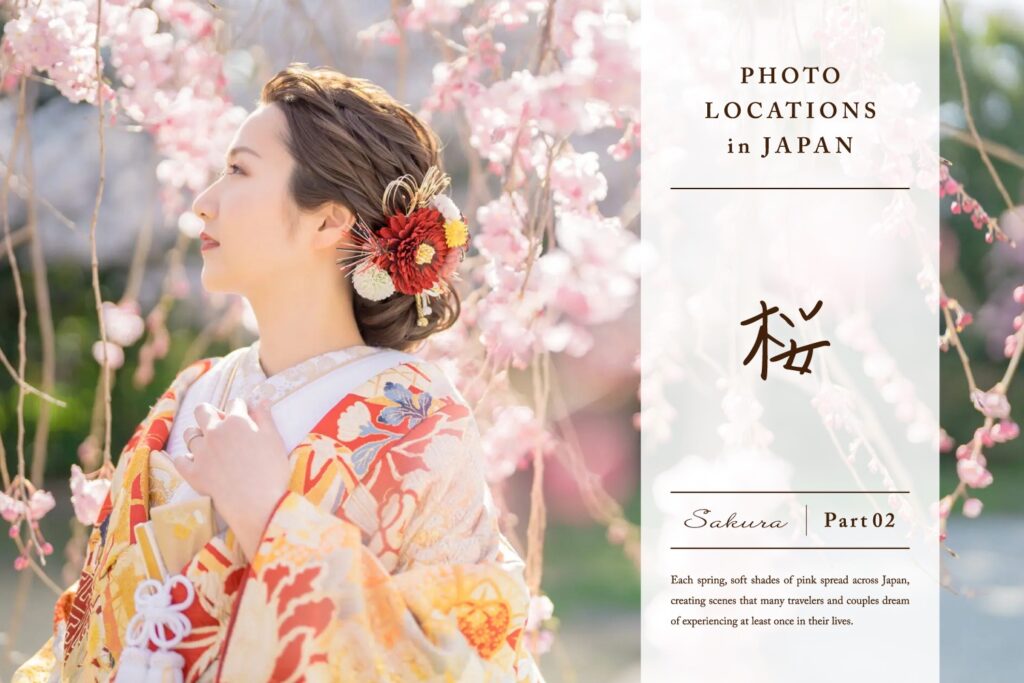
Why are people around the world so deeply drawn to Japanese cherry blossoms?
Each spring, soft shades of pink spread across Japan, creating scenes that many travelers and couples dream of experiencing at least once in their lives.
In this article, written from a Japanese perspective, we gently guide you through what makes cherry blossoms in Japan so special — from how they bloom, to different Japanese cherry blossom types, cultural meanings, and important considerations for photography.
※This article is created as a
basic guide for those considering a cherry blossom wedding photo in Japan.
If you would like to learn more about recommended locations or how to choose the best timing for your shoot, please refer to the related article below.
Why Are Cherry Blossoms So Popular in Japan?
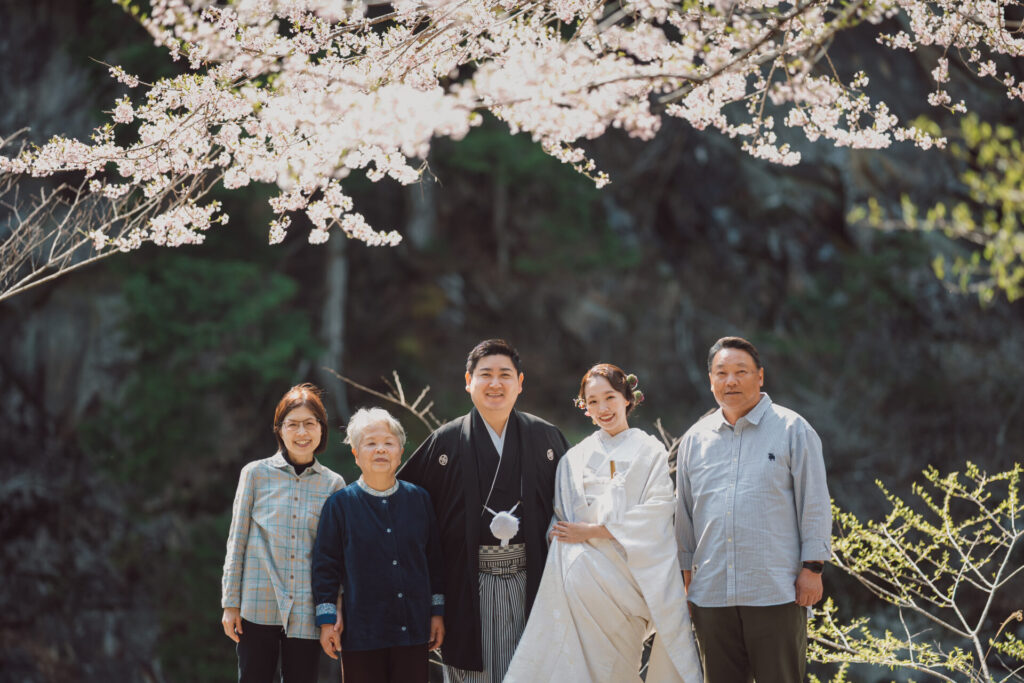
For Japanese people, cherry blossoms are more than just flowers.
For visitors from abroad, they are often the first image that comes to mind when thinking of Japan.
Their appeal goes beyond beauty alone:
- ・A very short blooming period, symbolizing fleeting beauty
- ・Blossoms that bloom and fall almost all at once
- ・Landscapes that naturally blend with cities, nature, and historic architecture
Together, these elements create a visual world that feels uniquely Japanese when captured in photographs.
This is why cherry blossoms are so often chosen for cherry blossom photography in Japan, including wedding and anniversary shoots.
When Is the Best Time to See Cherry Blossoms?
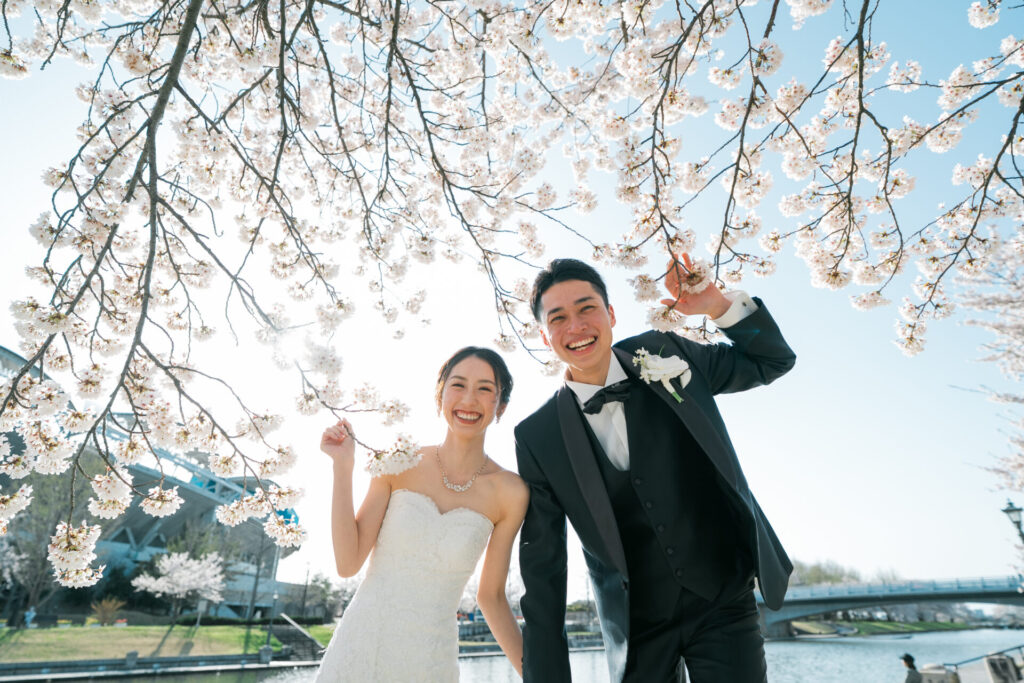
Understanding Blooming and Full Bloom (Explained Simply)
Cherry blossoms bloom in spring, but many people wonder, “Exactly when is the best time?”
Even for Japanese people, the answer is not always straightforward.
In this section, we explain how Japan traditionally determines the Japanese cherry blossom season.
What Are “Bloom Declaration” and “Full Bloom” in Japan?
In Japan, cherry blossom blooming is observed using specific trees called standard trees.
These trees are located at weather stations, nearby parks, or shrines.
For example:Tokyo: Yasukuni Shrine,Osaka: Osaka Castle Park (Nishinomaru Garden)
- ・When a certain number of flowers open → Bloom Declaration
- ・When about 80% of the flowers bloom → Full Bloom
This long-established method is unique to Japan and is widely reported in the news each spring.
For many Japanese people, hearing the bloom declaration is when spring truly begins.
Cherry Blossom “Best Viewing” Is Not Just One Day
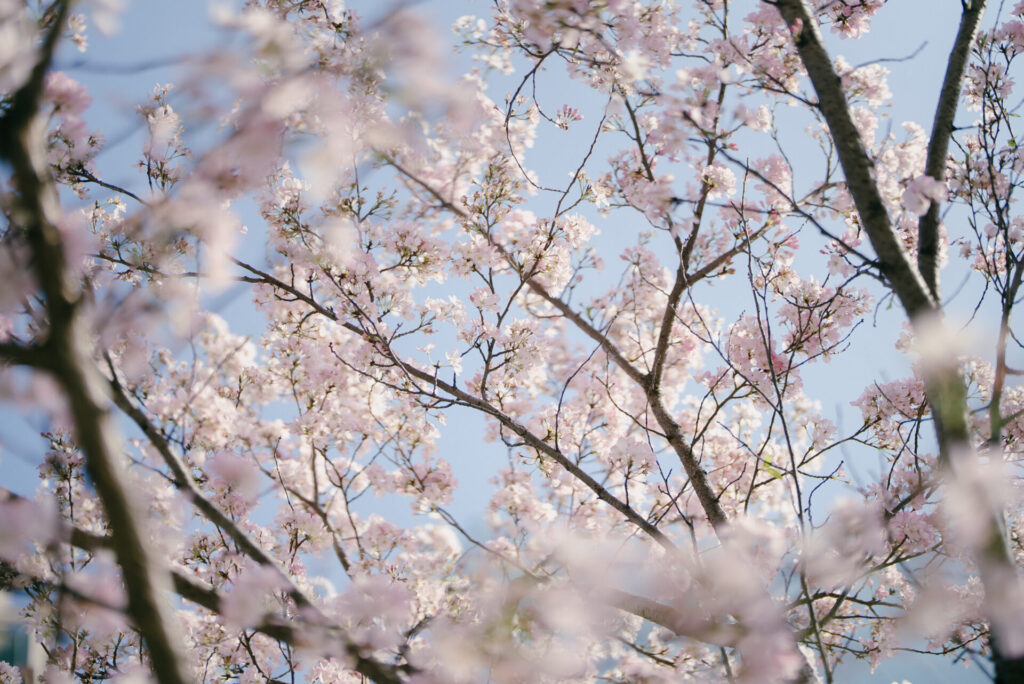
A common misunderstanding among overseas visitors is that cherry blossoms are only beautiful on the single day of full bloom.
In reality, each stage offers its own charm — especially for photography.
- ・30% bloom: Buds and flowers mixed together, soft and fresh
- ・50% bloom: A good balance of blossoms and open sky
- ・Full bloom: The most iconic “Japanese cherry blossom” scenery
- ・Petals falling: Blossoms floating in the air and on water, creating rich visual layers
When petals begin to fall, the scene is often called “sakura snow” in Japan.
This moment is considered especially emotional and cinematic, and is highly recommended for cherry blossom wedding photo shoots in Japan.
Blooming Dates Can Change Every Year
Cherry blossoms are a natural phenomenon, so blooming dates vary each year.
- ・Winter temperatures
- ・Sudden cold weather in March
- ・Rain and strong winds
Because of this, waiting to book after seeing the forecast can be risky.
For photography, it is more realistic to reserve early and prepare multiple location options.
Even within the same city, blooming times can differ depending on sunlight and elevation.
That is why careful consultation with your photography team is essential.
Japanese Cherry Blossoms Are Not Just One Type
A Simple Guide to Cherry Blossom Varieties
There are many Japanese cherry blossom types.
The blossom you imagine may be one of the following:
Somei Yoshino | Late March – Early April
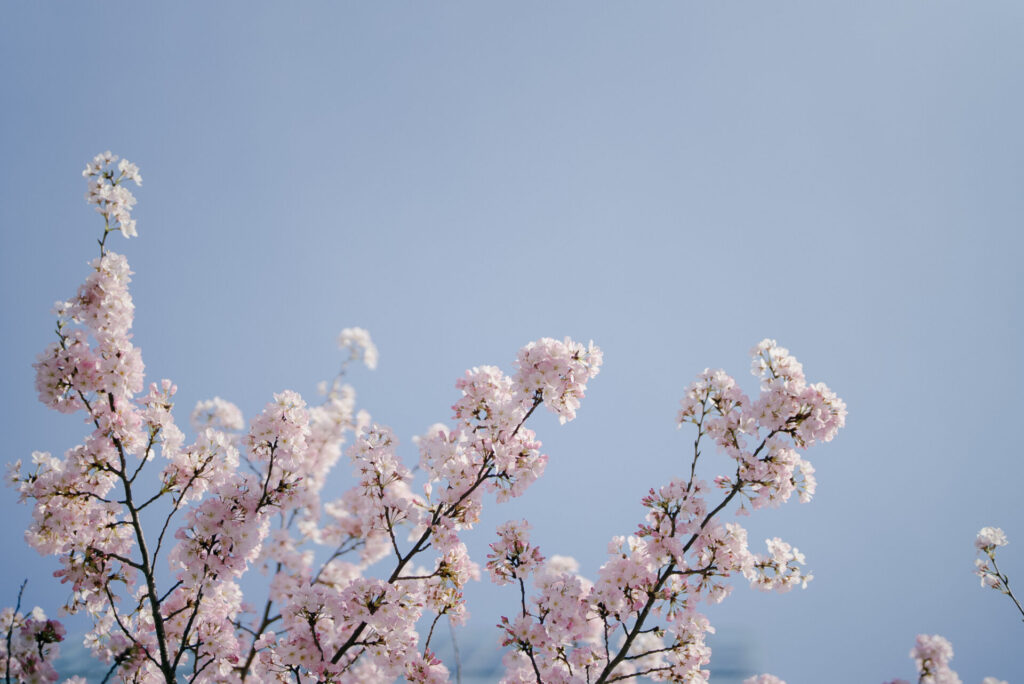
The most famous variety in Japan.
Pale pink flowers that bloom all at once — the classic image of Japanese cherry blossoms.
Weeping Cherry (Shidarezakura) | Late March – Mid April
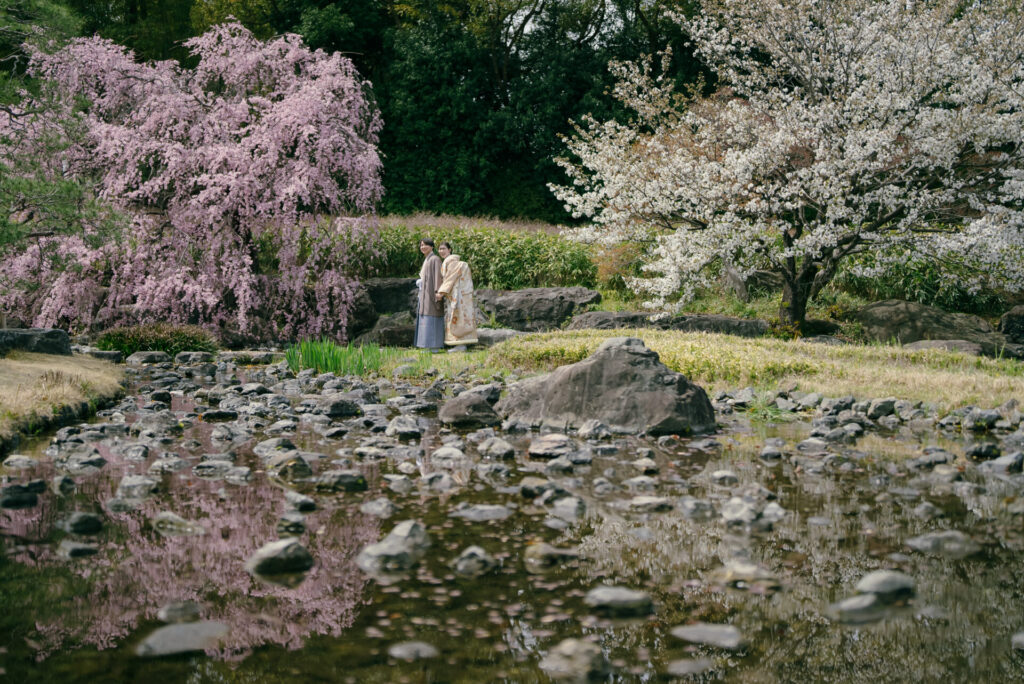
Graceful branches that fall naturally downward.
Flowers frame the face beautifully and pair especially well with traditional Japanese attire.
Double-Flowered Cherry (Yaezakura) | Mid – Late April
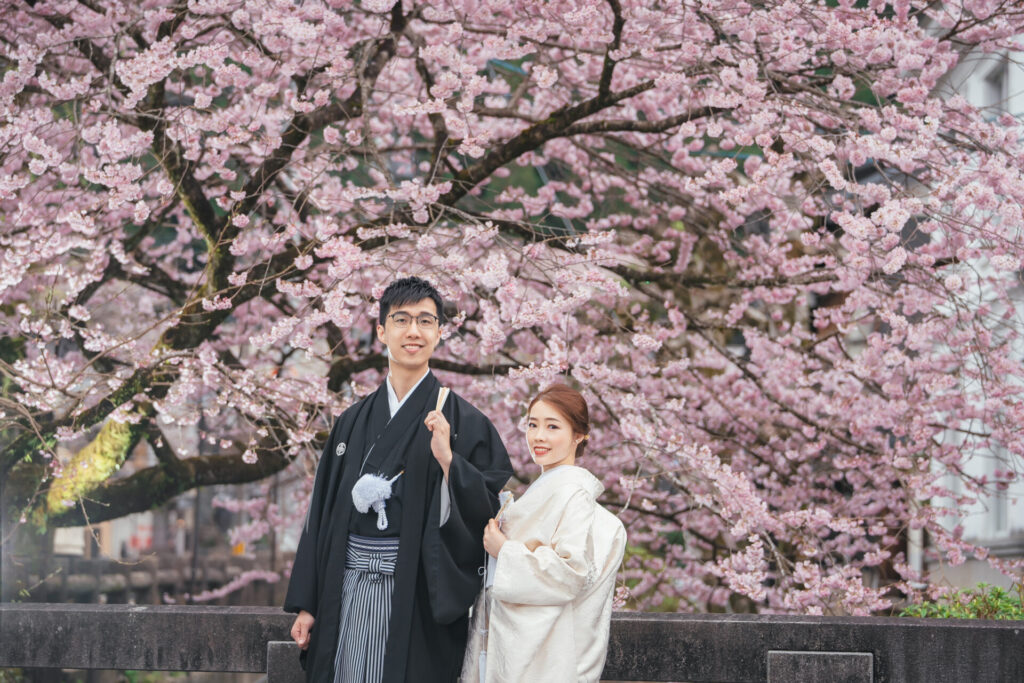
Deeper color and layered petals create a rich, elegant look.
A good option for shoots later in the season.
Kawazu Cherry | February – Early March
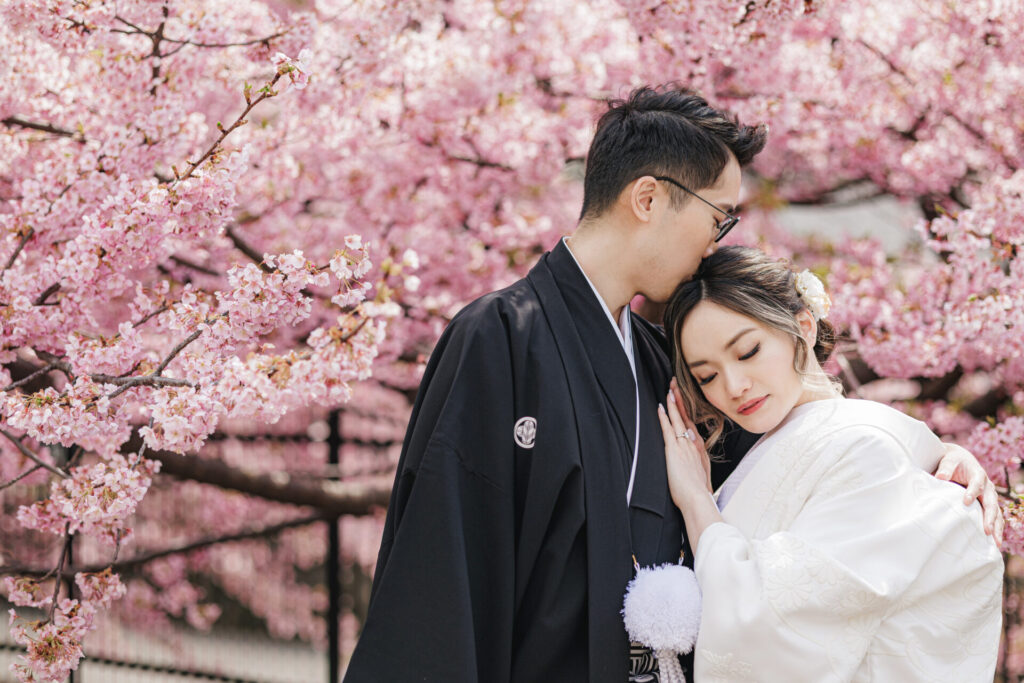
Early blooming with vivid pink petals.
Popular for couples visiting Japan in late winter.
Other Regional Varieties
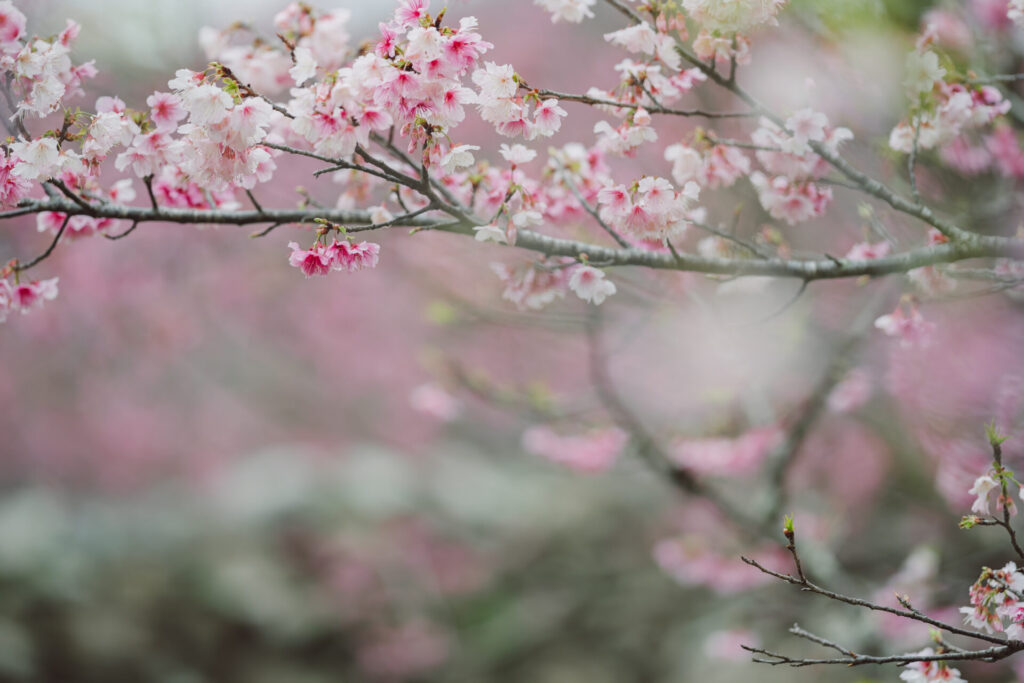
Such as Kanhi-zakura and Oshima-zakura, found in Okinawa and the Izu area.
What Japanese People Know About Cherry Blossom Photography
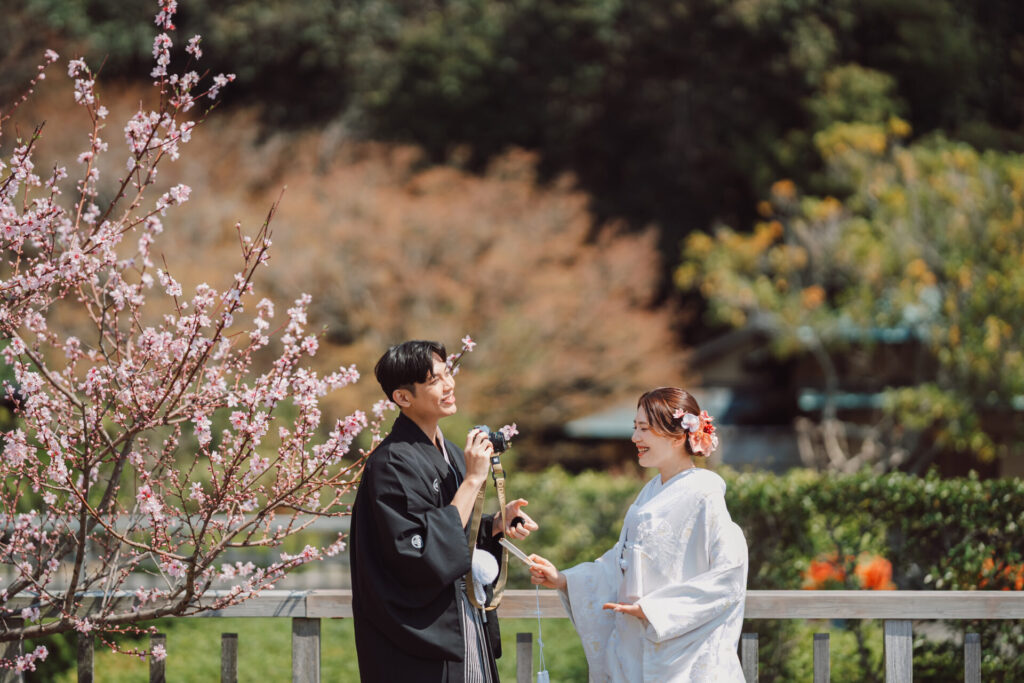
Rules for photography differ depending on the cherry blossom location in Japan.
Without prior knowledge, it is easy to unintentionally cause trouble.
Common restrictions include:
- ・Touching or breaking branches
- ・Entering restricted areas
- ・Occupying one spot for a long time
- ・Using tripods or drones
Some locations require advance permission.
Certain photography teams can arrange this on your behalf, so it is best to ask during consultation.
Cherry Blossoms Are Not Only Pink
Recommended Combinations for a Japanese Look
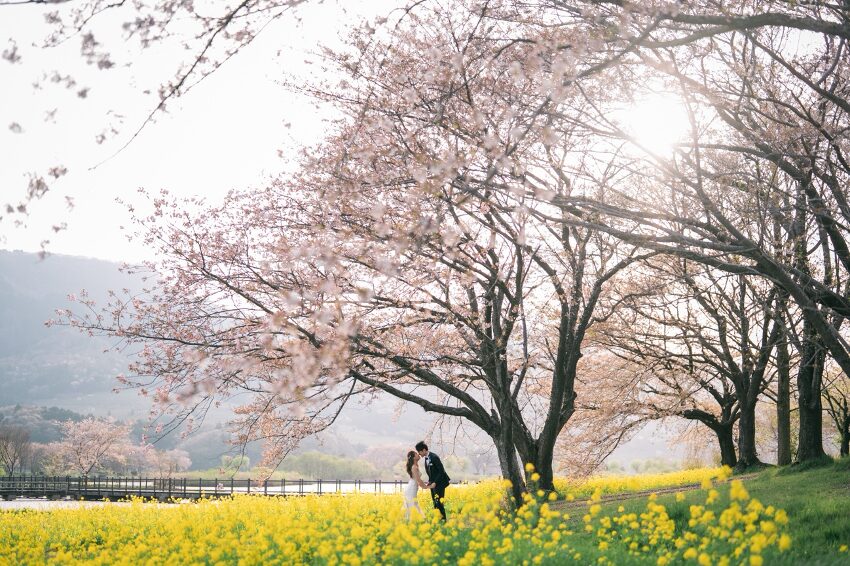
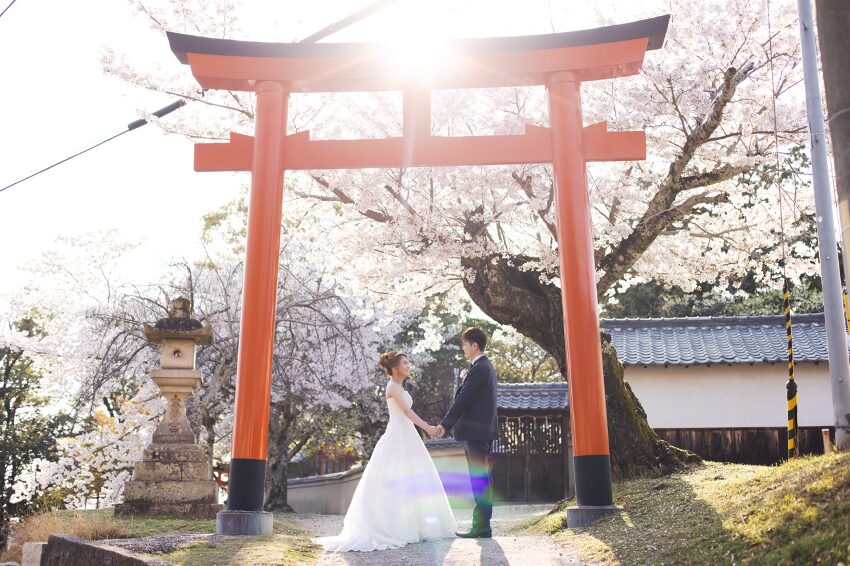
Combining cherry blossoms with other elements adds depth and character to photos:
Cherry blossoms × rapeseed flowers
Cherry blossoms × torii gates
Cherry blossoms × water reflections
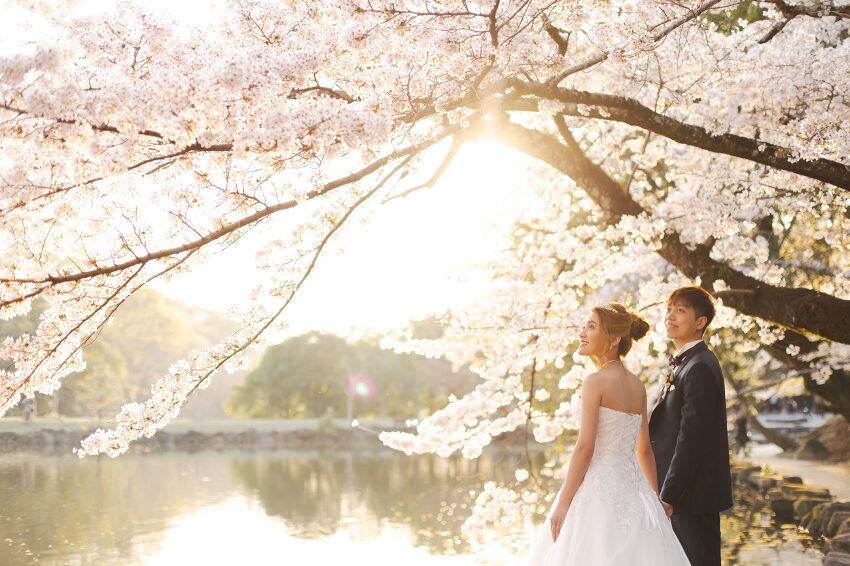
Cherry blossoms × traditional townhouses
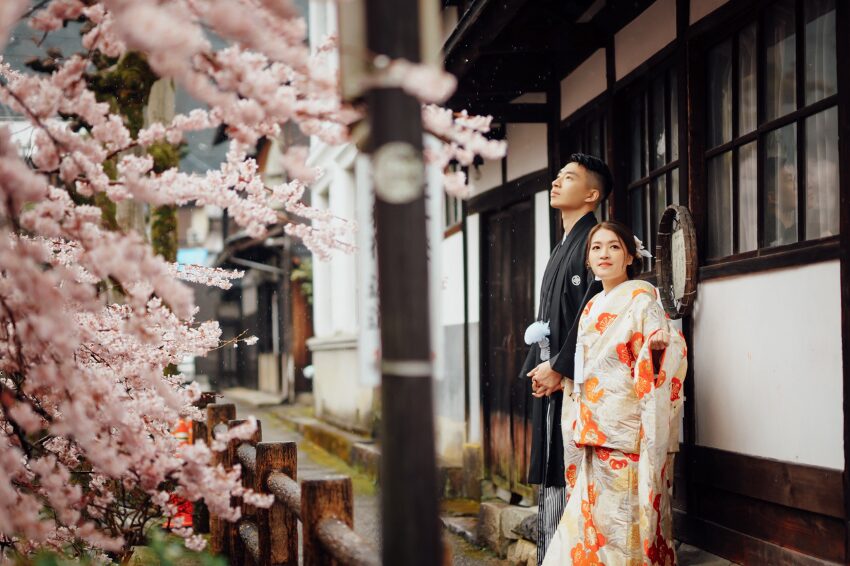
Pollen, Temperature, and Clothing
The Reality of Spring in Japan
Although spring feels warm, mornings and evenings in March and April can still be chilly.
Shaded areas may feel colder than expected, so outerwear or heat packs are recommended.
Spring is also pollen season in Japan.
Even travelers without allergies may experience discomfort. Masks or allergy medication can help.
As for attire, Western wedding dresses may feel colder than expected, while kimono can become surprisingly warm.
Preparing accordingly will make your shoot more comfortable.
Cherry Blossom Culture in Japan
Cherry blossom viewing has continued for over 1,300 years, from the Nara period to today.
In the Heian era, nobles wrote poetry under blooming trees.
In samurai culture, cherry blossoms symbolized the beauty of living fully and accepting impermanence.
Cherry blossoms also represent meetings and farewells, aligning with school graduations and new beginnings.
This is why sakura holds such a deep place in Japanese hearts.
Auspicious Cherry Blossom Traditions
Even Many Japanese People Do Not Know
In Japan, cherry blossoms have long been believed to carry prayers and blessings.
Blooming sakura once symbolized the presence of the divine and the start of a new season.
There are also traditions saying that keeping fallen petals brings good fortune, and that proposals made beneath cherry trees lead to happiness.
These gentle beliefs continue to live on today.
Perhaps this is why cherry blossoms remain such a meaningful choice for wedding photography —
quietly preserving Japan’s sense of beauty and hope.
Cherry Blossom Wedding Photography with La-vie Factory
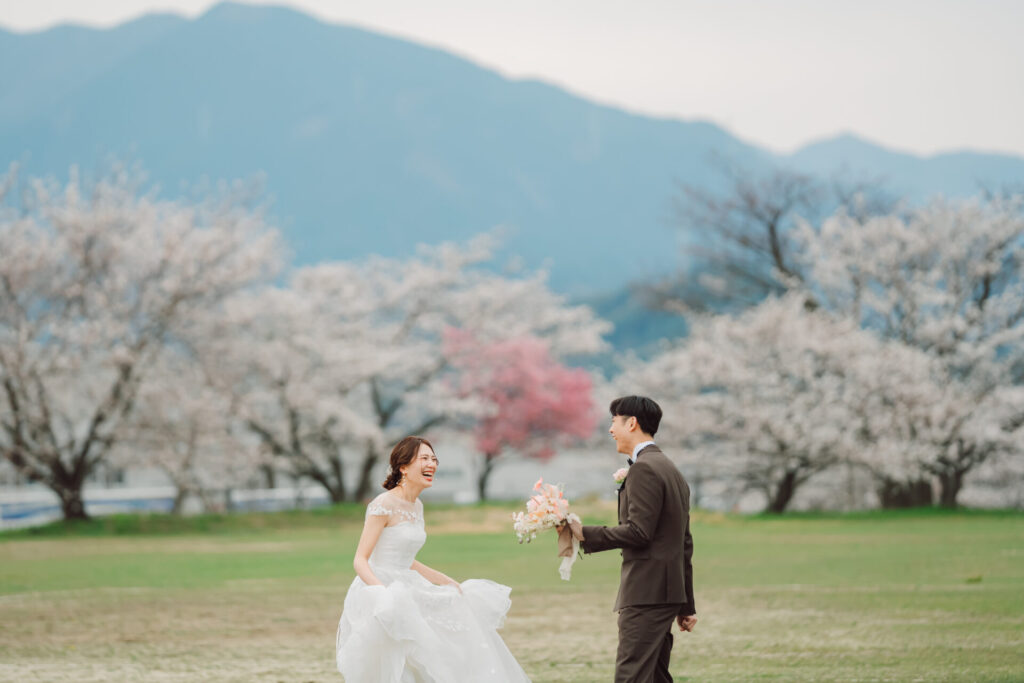
La-vie Factory offers cherry blossom wedding photo services in Japan for overseas couples.
During the sakura season, we also introduce limited seasonal plans.
For details, please visit:
Cherry Blossom Wedding Photo Consultation
When you understand cherry blossoms more deeply, your photos become more than memories — they become a story.
By choosing the right season, location, and variety, even the same spring can feel entirely unique.
If you are considering a cherry blossom wedding photo in Japan for Spring 2026, we would be happy to suggest options based on availability.
Even if your plans are not yet fixed, feel free to start with a free consultation.
Let us walk with you and help you preserve this once-in-a-lifetime moment beneath the blossoms.