
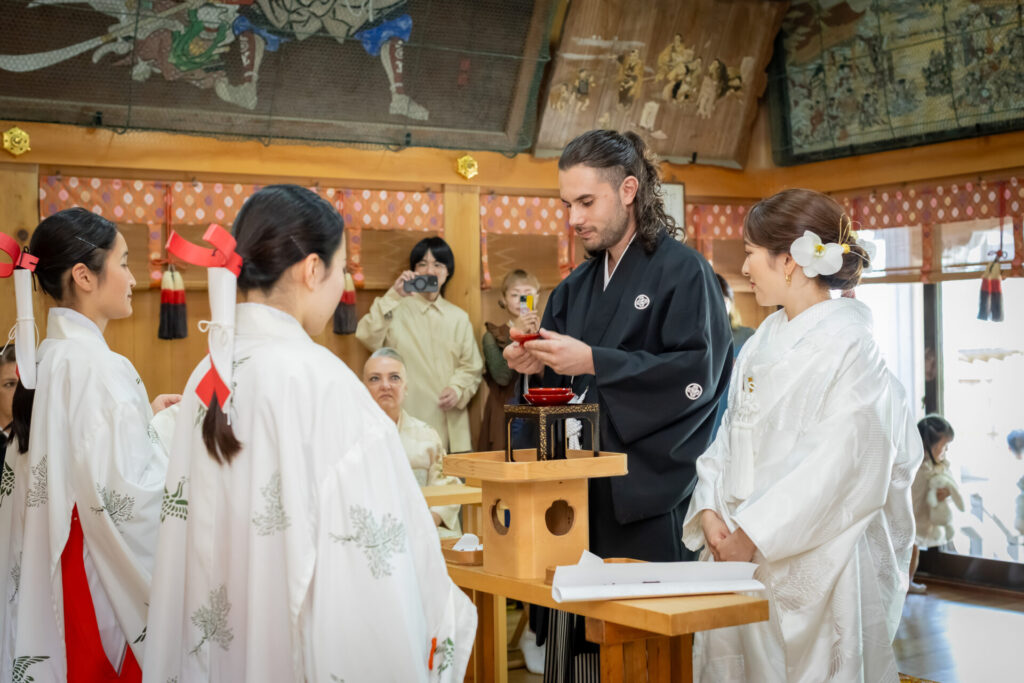
For international couples considering a wedding in Japan, a Japanese Shrine Wedding (Shinto Wedding Ceremony) is a truly special option.
Held at a traditional Shinto shrine, this style of wedding is not only visually stunning but also deeply meaningful, emphasizing family unity and sacred vows.
“Can foreigners have a Shinto wedding?”
“How much does it cost?”
“What is the schedule like on the day?”
In this article, we will clearly explain the basics of a Japanese Shrine Wedding (Shinto Wedding Ceremony), including the ceremony flow, the wedding day schedule, and cost considerations—so you can plan with confidence.
If you would like to explore other styles of weddings in Japan, please also see our related articles.
What Is a Japanese Shrine Wedding (Shinto Wedding Ceremony)?
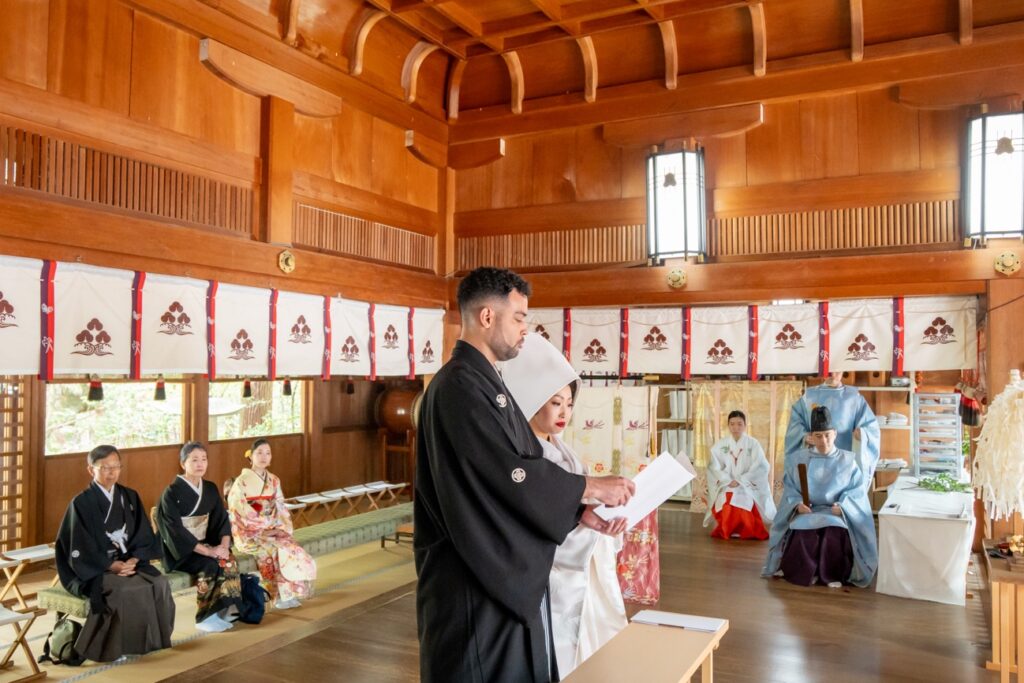
A Shinto wedding is a traditional Japanese wedding ceremony based on Shinto rituals and held at a shrine. It became widely known during the Meiji era after being adopted by the Imperial family, and today it represents one of the most iconic forms of a traditional Japanese wedding.
Unlike chapel weddings or non-religious ceremonies, a Japanese Shrine Wedding centers on reporting the marriage to the deities and formally uniting the two families. Rather than focusing on extravagance, it values dignity and tradition. Brides typically wear a white kimono (shiromuku) or colorful uchikake, embracing authentic Japanese culture.
For international couples, it is not just a wedding—it is a cultural experience.
Can International Couples Have a Japanese Shrine Wedding?
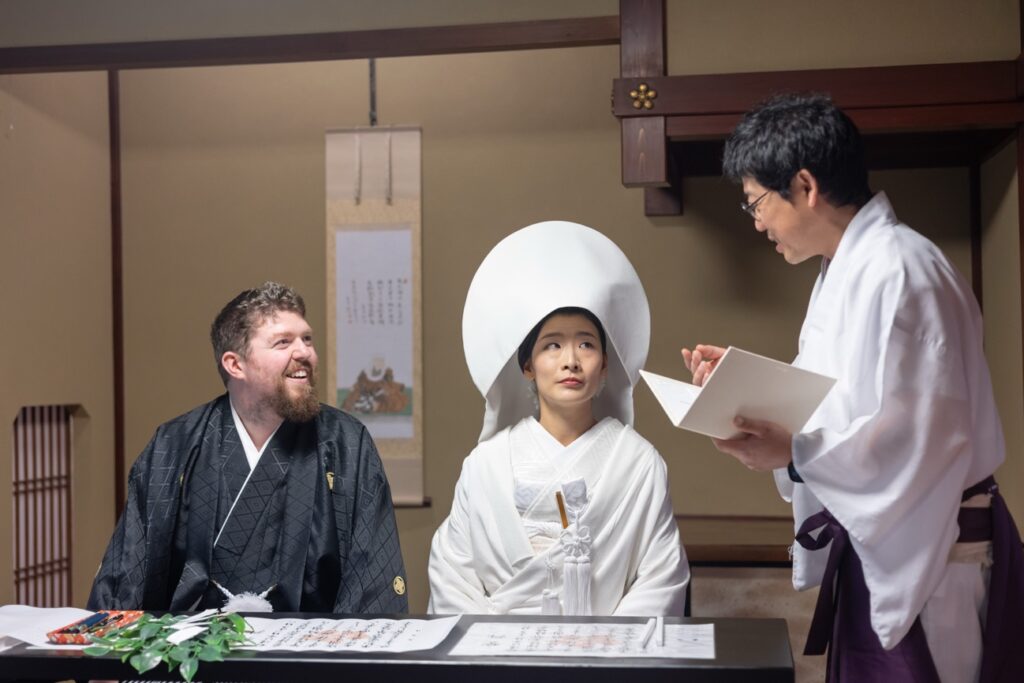
One of the most common questions is: “Can foreigners have a Shinto wedding in Japan?”
The answer is yes.
Are There Religious Restrictions?
Although it is a Shinto-based ritual, you do not need to follow the Shinto religion. A Japanese Shrine Wedding can be experienced as a cultural ceremony.
What If We Don’t Speak Japanese?
Many shrines and wedding companies offer English support. The ceremony process is explained in advance, so you can participate comfortably even if you do not speak Japanese.
How to Choose a Shrine
・Whether wedding photography is permitted
・Ability to avoid peak tourist hours
・Accessibility and transportation
・Availability of English support
Is It Possible on a Tourist Visa?
Yes, holding a tourist visa does not prevent you from having a Japanese Shrine Wedding. However, legal marriage registration must be handled separately according to your country’s requirements.
Japanese Shrine Wedding (Shinto Wedding Ceremony): The Wedding Day Schedule
Beyond the ritual itself, understanding the full-day schedule is important.
① Preparation
The couple meets at the salon for hair styling, makeup, and traditional kimono dressing before traveling to the shrine.
② Shrine Photo Session
Before the ceremony, photos are taken within the shrine grounds (for couples who book a photography plan). This typically lasts about 30 minutes and results in approximately 50 edited images.
③ Pre-Ceremony Explanation & Rehearsal
About 30 minutes are spent reviewing the ceremony flow and conducting a simple rehearsal. Family members should gather about 30 minutes before the ceremony begins.
④ Ceremony Begins
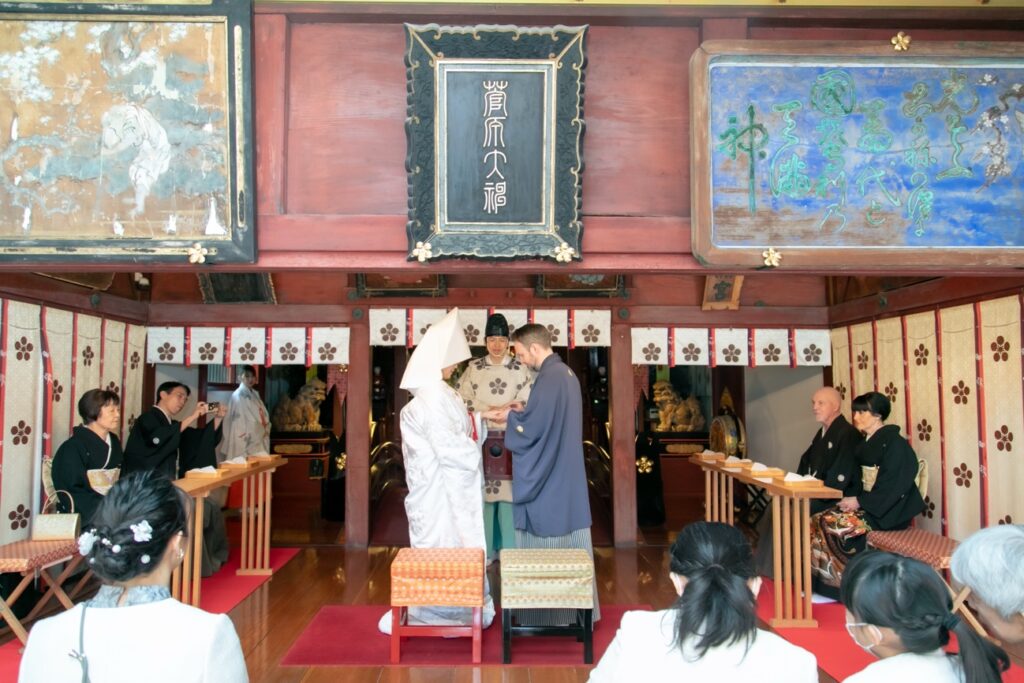
The Japanese Shrine Wedding follows traditional Shinto rituals and lasts approximately 30 minutes. Group photos are taken afterward.
⑤ Return & Conclusion
After photography, the couple returns to the salon to change outfits, concluding the day’s schedule.
The Traditional Flow of a Japanese Shrine Wedding Ceremony
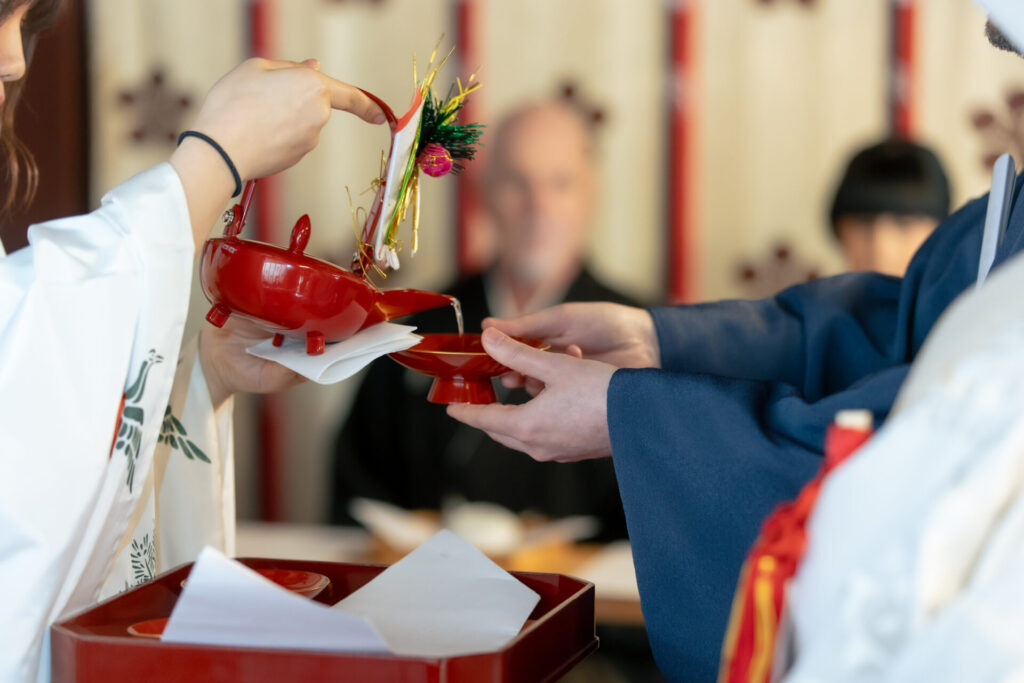
A typical Shinto wedding ceremony proceeds as follows:
- Procession (Sanshin): The couple walks to the main hall led by shrine attendants
- Purification (Shubatsu): A ritual cleansing of mind and body
- Norito Recitation: A formal prayer reporting the marriage to the deities
- San-san-kudo: The ceremonial sharing of sake symbolizing marital vows
- Vow Reading: The couple reads their wedding oath
- Tamagushi Offering: A sacred branch offering expressing gratitude
- Family Sake Sharing: Both families share sake to symbolize unity
A Japanese Shrine Wedding (Shinto Wedding Ceremony) can be understood as a sacred progression: purification → reporting to the deities → vows between the couple → union of families.
Cost and What Is Included in a Japanese Shrine Wedding Plan
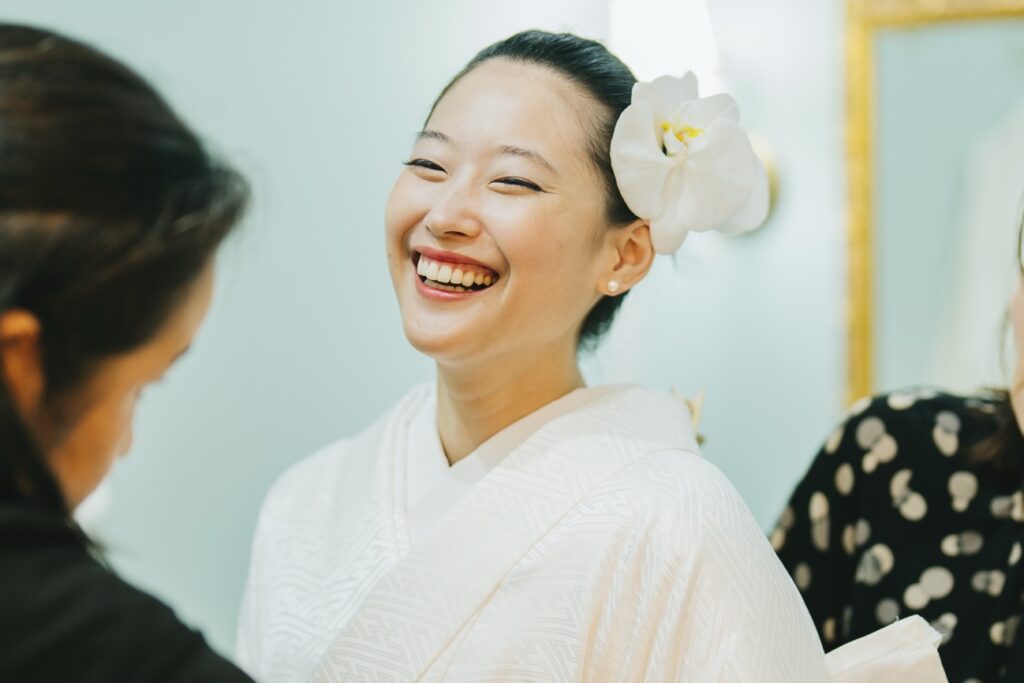
The cost of a Shinto wedding typically includes:
Hatsuho-ryo (offering to the shrine): Approximately ¥50,000–¥150,000
Traditional wedding attire (shiromuku or uchikake)
Hair and makeup
Photography services
Optional elements (live gagaku music, shrine maiden dance, etc.)
Pricing varies depending on the contents of the plan, so comparing options is important.
The Benefits of Combining a Japanese Shrine Wedding with Wedding Photography
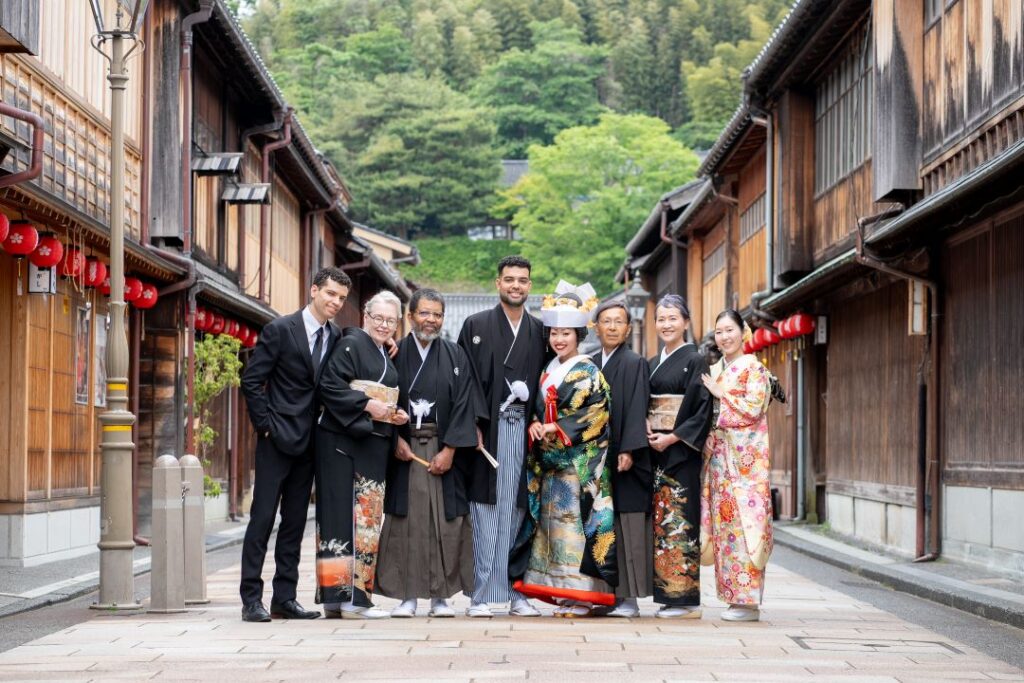
By combining your Shinto wedding with professional wedding photography, you can preserve not only the sacred ceremony itself but also the seasonal beauty of the shrine and the elegance of traditional attire. Natural moments before and after the ritual—especially time spent with family—become part of your lasting story.
It is more than documentation; it is a timeless memory.
Japanese Shrine Wedding (Shinto Wedding Ceremony) with Photography at La-vie Factory
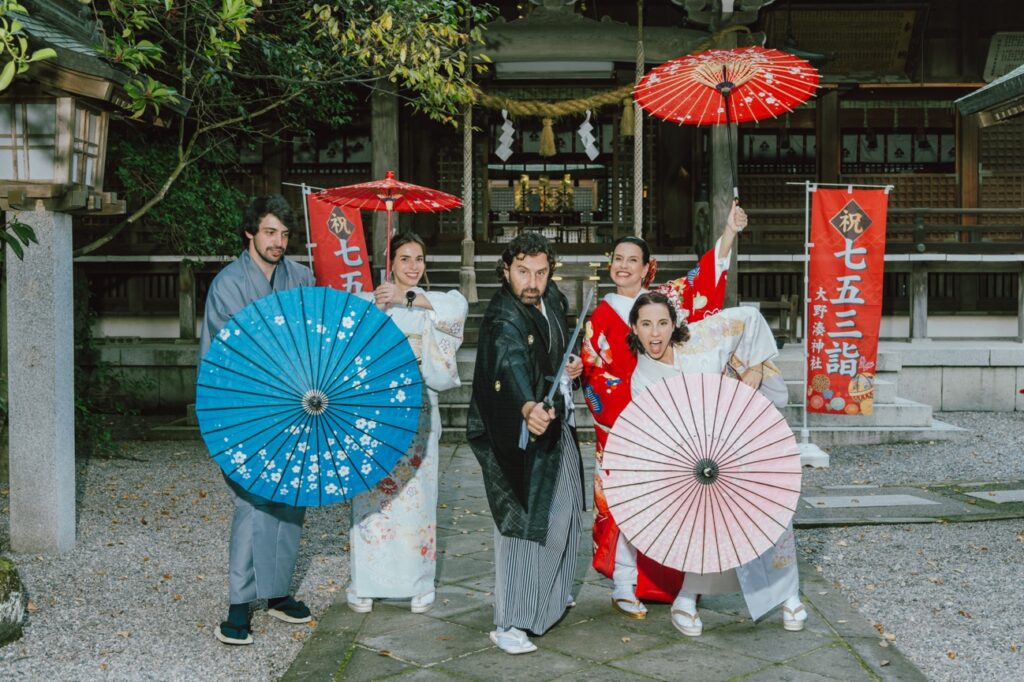
At La-vie Factory, we provide comprehensive support for Japanese Shrine Weddings, including coordination with shrines across Japan, traditional attire, styling, and photography. We offer a seamless experience designed especially for international couples, ensuring your special day is beautifully preserved in one of Japan’s most historic settings.
Conclusion
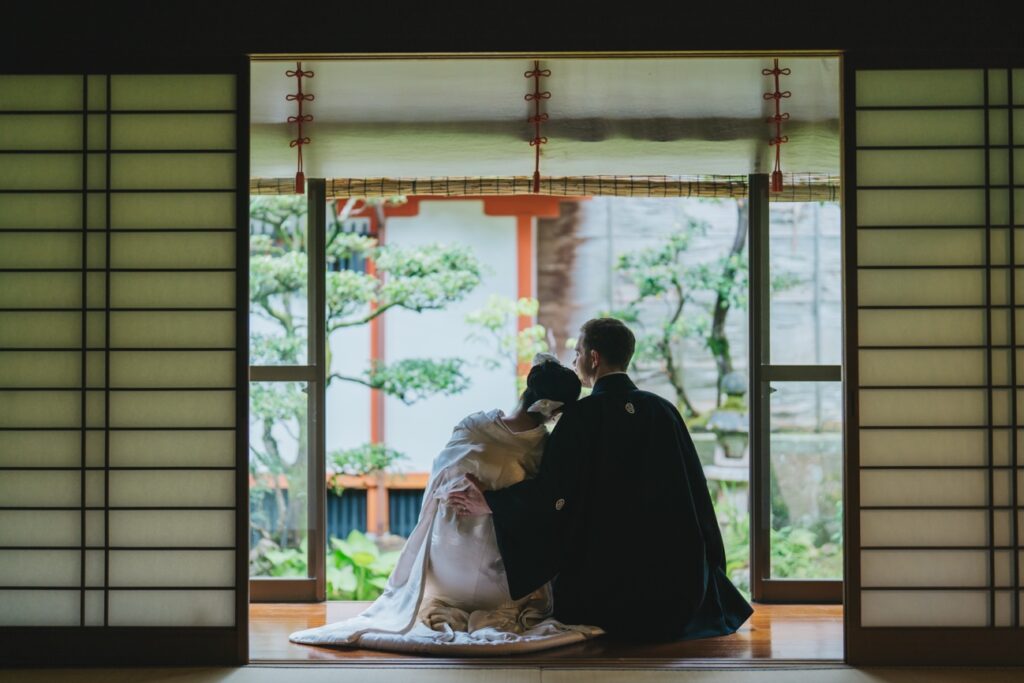
A Japanese Shrine Wedding (Shinto Wedding Ceremony) is more than a cultural experience—it is a sacred moment where two people are united under the blessing of the deities and their families. International couples can confidently celebrate in this traditional style and create unforgettable memories surrounded by the beauty of Japanese shrines and kimono attire.
If you are interested, please feel free to contact La-vie Factory for more information.